The wellness wallet: K-beauty now competes with your gym membership
Ask a Gen Z shopper to split a monthly wellness budget and skincare lands in the same pile as healthy food, the gym, and supplements. That changes who K-beauty is actually competing with.
Cafeteria's Gen Next Talks Health & Wellness study (via BeautyMatter) ran a simple exercise: give young shoppers a hypothetical monthly wellness budget and watch where it goes. Skincare didn't land next to lipstick and perfume. It landed next to healthy food, gym memberships, and supplements — treated as a health line item, not a beauty splurge.
A different competitive set
That reframes the whole contest. For years a K-beauty serum competed with other serums for a slice of the beauty budget. In the wallet Gen Z just described, it's competing with a protein order, a Pilates class, and a bottle of vitamins for a slice of the health budget. The rival isn't the brand next to it on the shelf anymore; it's whatever else promises to make someone feel well this month.
K-beauty already got in the door
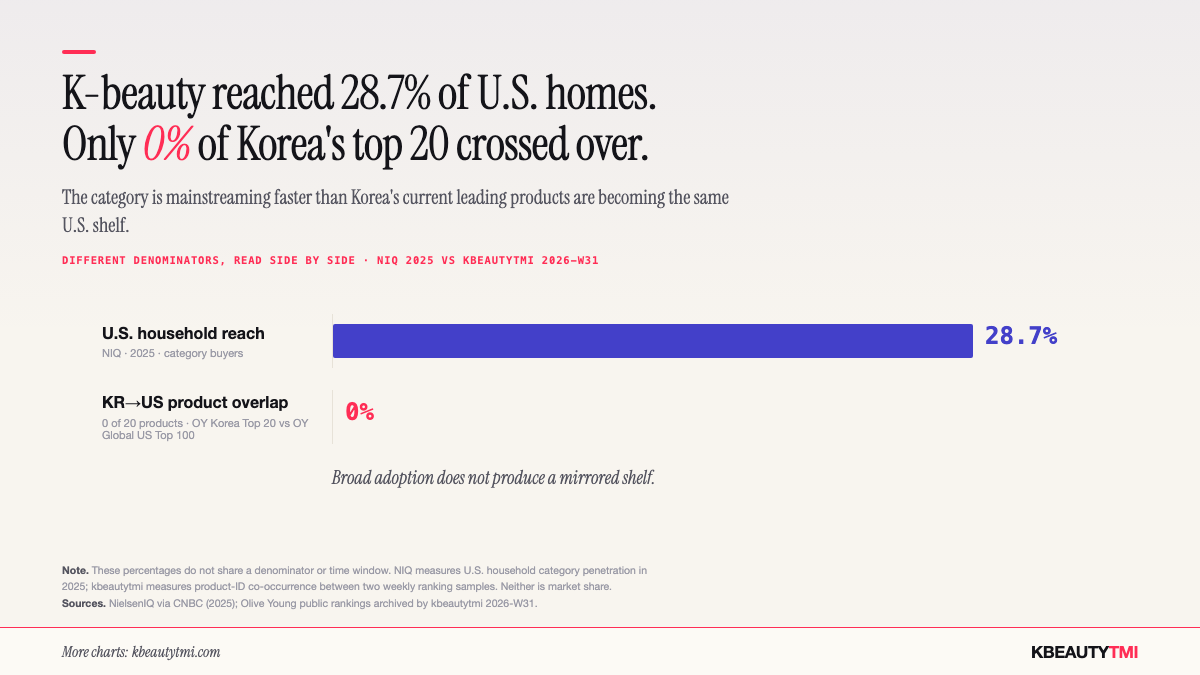
The good news for the category is that it's already inside that wallet at scale. K-beauty has reached roughly 28.7% of US households (NielsenIQ, via CNBC) — not a niche, a broad base. The chart above is the tension we watch: that wide American reach on one side, and on the other, how little of Korea's own top-20 actually crosses over. Getting into the wallet and staying the routine are two different achievements.
Keeping the slot is the hard part
And this is where the wellness framing cuts both ways. A health line item gets scrutinized like one. The same shoppers who filed skincare under wellness are the ones who assume a claim is marketing until it's proven — so a category that wins the wallet on feel can lose it the moment the feeling isn't backed by anything checkable. We don't measure whether a product earns its keep in someone's routine; that's between them and the evidence. We measure where each brand actually charts, week over week, so the reach is a number you can watch rather than a story you're told.
"The wellness wallet: K-beauty now competes with your gym membership" — kbeautytmi, 2026-W31. https://kbeautytmi.com/stories/the-wellness-wallet
↗ Chart image — free to use with credit Free to cite — rankings can't be collected retroactively, so this archive exists nowhere else.